Saturday, June 4, 2011

From Platitude to Tolerable: A Blog's Story (Meta-post)

When one is asked to reflect on their own writing, two things come to mind: 1) what one could improve and 2) what one's strengths are. Therefore, I would like to tackle both of theses as I assess myself with my final meta-blog.


Part one: Weaknesses


As I look at the past three blogs I wrote this quarter, I notice that I have written only three blogs. By writing only three blogs, I have basically failed this assignment. Through writing these blogs, I have learned to take the blame for stuff that I have done. It is my fault that I have only written three blogs. Last quater I would have probably blamed my lack of writing to being too busy, but luckily last quater I did not need to write a meta-post. This quater I have grown and take full responsibility for writing only three blog posts. 


I'm just not very good at transitions between points. 


Another weakness is sentence flow. I write very choppy. It does not flow. It makes my posts hard to read. I will work on that. 


Part Two: Strengths


I have finally mastered making my posts look pretty. Pretty posts and pretty pictures and a pretty font makes for a happy reader!


Writing about something I care about makes for a more fun read. You can sense the passion through my writing which, I hope, makes people think. In all three of my blogs I wrote about something I somewhat cared for. These posts flowed better, had better content, and informed people about something that they may have not been to aware of before. 


I have also found my voice (hence the picture of Ariel from the little mermaid because she lost her voice, but got it back after Ursula died). By being able to practice writing throughout the year I have been able to find my own unique voice when it comes to writing. I have been told by past english teachers that this is one of the hardest things to learn, and trust me, it took awhile. But I think, with a bit more practice, I could really have it down.


Before I finish I just want to say one thing. I'm very happy that I got to have a blog this year. I have learned that blogging is not my thing. But at least I got the opportunity to try it.


Oh, and please grade this lovely entry: If Rosebud Never Exsisted

Tuesday, April 12, 2011

If Rosebud Never Exsisted

In case you haven't been keeping up to date with my blogging (in which case shame on you) then you wouldn't know that lately I have been writing a research paper on federal spending for the arts. Through my research I have found out about the Federal Theatre Project (FTP) from the 1930's. Basically with this project, the federal government gave money to the theatre to help keep it going. As the director of the FTP, Hallie Flanagan said, "while our aim is to put to work thousands of theatre people, our more far-reaching purpose is to organize and support theatrical enterprises so excellent in quality, so low in cost and so vital to the communities involved that they will be able to continue after the federal aid is withdrawn." Ah, if only the world was perfect.

While this program was in place, they were able to support such people as Will Geer, Burt Lancaster, John Houseman, Sidney Lumet, E.G. Marshall, and most famous of all Orson Welles. In fact over the weekend I just watched Welles masterpiece, Citizen Kane, a film commonly thought as the best movie ever made. It's crazy to think that if FTP never helped Orson Welles when he was a young up-and-comer, then the world may not have ever been introduced to the artistic genius. The look of films today would look dramatically different without the influence of Welles' techniques.

The FTP came to an end 1939. I'm not saying that the government should start up a program as intense as the FTP, especially in today's economy, all I'm saying is that the government shouldn't cut spending all together. Without government spending, we may be depriving ourselves of people who have the ability to be as influential as Welles, but just don't have the means to do it. I know that we need to cut federal spending, but why cut the arts? after all we only spend .0051% of the budget on the art, why not cut the real money eaters like the defense budget, which we spend 16.3% of our budget. After all, as Jonathan Larson  wrote in his hit musical, Rent, "The opposite of war isn't peace; it's creation." 

Friday, April 8, 2011

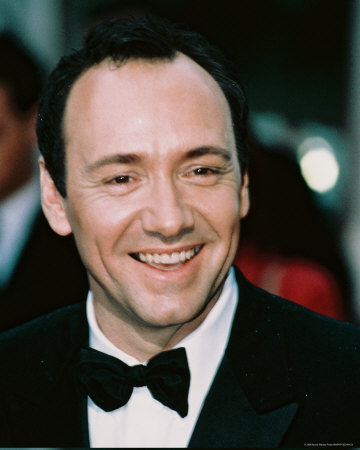
Kevin Spacey, Alec Baldwin, and Tim Robbins. OH MY!

Actor Kevin Spacey
The government gave $124.4 million dollars to the arts in fiscal year 2006. Although it seems like a hefty sum, when compared to the entire amount spent in that same year, it only amounts to .0051% of the budget. And this was the amount we spent before the recession. Now the National Endowment for the Arts (NEA), the government organization for the arts, is in even hotter water because of the spending cuts and possible government shutdown.

According to this New York Times article, Kevin Spacey went to Lobby for the Arts on Tuesday. And as we all know, when a movie star starts to stand for something, then we know it's a big deal. Not only has Mr. Spacey called attention to this, but so has the actors Alec Baldwin and Tim Robbins. 

Throughout the Junior Theme process I've been uncovering why the Federal Government has been declining on their spending for the arts. This topic hasn't been seen much in the news, although it has been a problem since the late 30's.My topic has been becoming more relevant throughout the Junior Theme process. Sorta Cool.

Thursday, March 24, 2011

I'm Not That Smart

So I've started this wonderfully, fantastic euphoric journey known as the Junior Theme. One book that I have been reading is A Whole New Mind by Daniel H. Pink. In short, the book is about how right brain thinking is becoming more and more important in society. While reading the book I've become more interested in how my brain works.

Of course I know that it's not scientific or official, but I decided to take an online test on weather I am right or left brained (If you would like to try click here). In the test I got pretty close to splitting even, although I lean a bit to the right side, which means I'm more artistic. Right brained people are also generally better at reading people's emotions, which means that they would be more successful in the fake psychic business. On the other hand, left brained people tend to be more analytical. These are the people who would make the best computer programmers.  

What ever side of the brain you tend to lean to, there are ups and downs for both. An example is that right brained people have more trouble with taking standardized tests like the ACT. The downside for left brainers is that jobs, like computer programming are being outsourced. Don't believe me? Read A Whole New World.

Because I am not completely right brained, I do not have a creative way to end this post. So I'm just going to finish.


Sunday, February 13, 2011

A Change in Attitude

women protesting in Egypt
In class we commonly discuss stereotypes, in fact just this past week we listed all the stereotypes we see in the media of African-Americans. There are many other stereotypes then just that of the black people, but also of the studious asian, the nerdy jew, the non-english speaking latino, and worse of all the terrorist arab. 


The american view of the arabic people is that they are extremely sexist, extremely religious and extremely violent. When many americans picture the middle east they see car bombs, roadside bombs, people throwing grenade bombs or with bombs strapped on to them. So, if the american stereotype is correct, where were these bombs during the Egyptian protests? 


The fact is, the  Egyptian revolution was peaceful. The protestors were non-violent and just standing up against a government. What the Egyptians did went against the american stereotype. Our own revolution in the 18th century was a lot bloodier than in Egypt, so why aren't we seen as the violent ones (with how we deal with gun control our stereotype may just change).


Hopefully the Egyptian protests will change the american attitude toward Arabic countries and see that they are not violent terrorists, but just people.    

Monday, February 7, 2011

I Can't Finish

Today in AS we talked about why Mark Twain took a muli-year hiatus from writing the Adventures of Huckleberry Finn because he was not quite certain how to finish the book. I praise Mr. Twain for having enough willpower and gumption to finish his masterpiece of literature, because when it comes down to it, it's very hard to complete things. 


Why is it hard to finish? In Twain's case it was because he had so many different ending options to choose from. But let's say, for example, you were making a scrapbook. Seriously just go with me here. And let's say it's been roughly five years since you actually glued and pasted in there. Why is it that I- I mean you- can't seem to finish? Is it because of lack interest and importance, or is it just a pure absence of ambition? 


Not only are nonsignificant memorabilia projects hard to complete, so are other creative works. The Famous Composer Franz Schubert had trouble finishing his 8th symphony, otherwise known as the "Unfinished Symphony". Although he lived a few more years after writing the first two movements, he never seemed to be able to conclude it. Orson Welles  too left some of his films unfinished and Leonardo DaVinci's The Last Supper has some latin scripture on it that is incomplete. Finishing just seems like an hard

Sunday, January 30, 2011

Why a Democracy?

This Morning I was lounging on the couch watching one of those Sunday Political News shows with my Mom. The hot topic was the revolts going on in Egypt right now. The host of the show was interviewing our current Secretary of State, Hillary Clinton, who was talking about maybe installing a democracy in Egypt. I turned over to my mom, who was sitting to the left of me, and asked her, Why A Democracy?
Freedom of Speech
from Norman Rockwell's Four Freedoms


Sure Democracy, or rather more of a republic, has worked out great for our country. I feel that, although not everyone in pleased with the people who are in office, they are at least pleased with how our country is run. Democracy is the government that works for the U.S. and many other countries, but would it work for every country?


In some countries, the democratically elected leader is hogging the office. In 2005 Palestine held a democratic election and elected Mahmoud Abbas to presidency. Abbas has lived out his full term, but has yet to step down from office. And in Iran, Mahmoud Ahmadinejad was also elected in 2005 and reelected in 2009, although many speculate the authenticity of the results. Part of being in a democracy is giving the people a voice by voting and allowing them to choose a new person to take control . But in some countries that person elected takes over and democracy just doesn't seem to be working anymore. 


Although Democracy is a good government, is it for everyone? Are there better options out there for other countries? To be honest, I don't know.

Sunday, January 16, 2011

Thoughts on My Slightly More Fascinating Than A Platitude Blog

If my blog was food,
it would look like this
Looking at my past blog on my blog, "My Blog: A Platitude", I have defiantly improved. I am no longer Vapid, arid, and at times irksome, but rather just sometimes insipid. 


Especially when I talk about stuff that actually matters. For example my blog about taking the N-word out of Huck Finn called "Neglect". I must admit that it is one of the few blogs where I talk about a hot topic in today's society, but the blog entry is so bromidic and stodgy.  Yes I have a view on this topic, but I am not passionate about it, therefore my word choices are about as spicy as a saltine cracker. In "My Blog: A Platitude" I said that I should try to focus more on topics I care about because it makes my writing stronger. But the fact of life is that I'm going to have to write about topics I could care less about, but I still need to make them entertaining. So, I believe I have found my thing to work on this next quarter.


Another thing I struggled with was being able to keep my voice but still get my "important" point across. My voice in writing is generally comedic, which can be a gnarly thing or an abominable thing. Probably my worst blog entry was "How to Spot an Impostor", which only talks about how I am untrustworthy (which, trust me, does not further society). In it I sound like I try to hard to be funny, which pretty much means that it was not funny. It's just a heinous blog post, 'nuff said. But when I do not put in humor, such as with my post "It Comes With Time", it still ends up wretched. Another thing I need to work on is to find the a nice in between with humor and intellect.


Which leads me to the blog that I would like to be graded, titled "Meh". This blog is both humorous but insightful at the same time. This post makes me feel like a modern artist. Each person who comments see's something different within the post. Weather it is just me making fun of the OED, commenting on modern day slang, or talking about how we don't just communicate with words, everyone seems to have a slightly different take. And I like that, I'm making people think. 

Saturday, January 15, 2011

Morality Stages on Stage

In Class we talked about Kohlberg's Stages of Moral Development . The highest stage is stage 6, which is when you do what you believe is right and face the circumstances. Supposedly a person to reach this level of morality is very rare, but not when it comes to entertainment.


Today is rehearsal for the school musical, Les Miserables, I was thinking about the choices that the characters make. An example of the rare souls at stage 6 of morality are the student revolutionaries. (in case you did not know, this musical takes place during the French Revolution) These students were willing to fight for their rights and except the consequence of possibly dying.


 SPOILER ALERT!


All the students end up dying, well all except for pretty-boy Marius. This got me to thinking about how so often in entertainment we see characters who exhibit stage 6 tendencies.


 One of my favorite movies, Mulan, is about a women who was willing to enter into china's imperial army as a man, despite the fact that if she was found out she would be killed. Despite such a gruesome consequence, her morality buzzer was buzzing that it was the right thing to do because her father was to old to go back into the military.
The reason that we are entertained by Stage 6 characters is because they are rare, and isn't rarity something fun to watch?

Friday, January 14, 2011

Life With Out Theatre Teachers


The Mona Lisa was painted
by Leonardo da Vinci
Awhile back in class, Mr. Bolos said that the one teacher his daughter had the strongest connection with, her chorus teacher, was laid off. Not because the teacher was not talented at inspiring students, but simply because funding for the arts just wasn't there. Sadly this is not uncanny in today's world.

When Mr. Bolos said this is really struck a chord with me. My favorite thing to do in the whole world is to act and I am very close with the 4 theatre teachers at my school. If I did not have the support of these teachers I would feel lost. I'm glad that my school has the money to keep the arts running because if it didn't I would never have discovered my passion and I would not feel talented nor special.

Constantly in the news I hear about how public school have been shutting down their arts programs leaving hundreds of children unable to find their talents and passions. The art world is slowly declining because art education is not being taught in schools. Just a few weeks ago in another class of mine a girl could not answer who it was that painted the Mona Lisa. We need to keep the arts in school, they are an important outlet express ourselves and I know my life would not have been the same without the support of my theater teachers.

Wednesday, January 12, 2011

It Comes With Time

Today, in American Studies, we looked at illustrations from various time periods of the character Jim from the book the Adventures of Huckleberry Finn. Through these pictures our class could catch a glimpse of how many people in the US felt about black people.  We saw Jim turn from an ape like man with bats in the belfry hair in the 1920's to just a normal looking person that we see in today's books. The further along we got in history, the better representation Jim had in the illustrations. 

This pattern of having a better reputation as time goes along is a very common one. For example Honest Abe did not have the highest acceptance rating while he was in office. but, looking back today, we view him as one of the best presidents in our history. And there was also Vincent van Gogh who was a  starving artist with a tormented soul during his life, but today he is infamous for both his artwork and for cutting off his ear. And I can not forget about my favourite Christmas film, It's a Wonderful Life, which was a flop at the box office but a timeless classic now. 

So basically, with time comes a new perspective. Our hindsight allows us to view things differently. And who knows, maybe someday this blog will be famous, but not until the future. 

Tuesday, January 11, 2011

How to Spot an Impostor

This is not me,  Although I wish I had his hair
In class we talked about the credibility of a person. Often, the more you trust a person, the more credible you find them. So I am here to tell you, that although you may think of me as a trustworthy person I am not credible. why? Well let me tell you.


1. I cite Wikipedia all the time. If I were an expert in a subject I would probably cite a more creditable source, like my new medical journal all about chinchilla pancreases, but instead I cite a website where anyone in the world can change the subject at any time. 


2. I write very informally. If what I was saying was actually credible I would not be cracking jokes right and left. Although I think they add a nice touch...


3. The title of my blog is An American Ignore A Moose. Let me show you how to pronounce it. An...American...IgnoreAMoose. If you still do not get it basically it's called An American Ignoramus, and as we all know from the little golf tee game at Cracker Barrel, we should never trust an Ignoramus.


So now you know that I am not an impostor trying to look like a journalist or expert on chinchilla pancreases. but rather an anonymous person writing a blog. 

Monday, January 10, 2011

Neglect

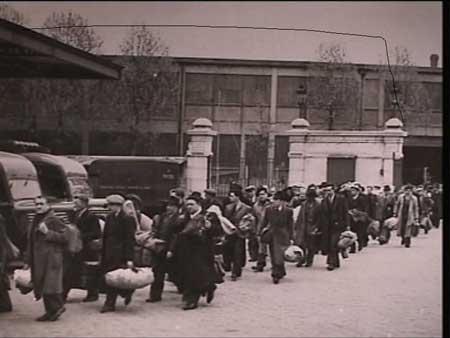
French Jewish people outside of Vel' d'Hiv
during the round up.
Over our Winter Break, one of the novels I read was Sarah's Key by the talented French writer Tatiana de Rosnay. The book is about how during the WWII the french police rounded up the Jews living in paris and ultimately sent them to their death. This event was called the Vel' d'Hiv Round up. Even more interesting to me was that today many french children are not taught about this tragic event in school. Through not teaching them about the round-up, it is almost like this part of history did not exist.


While reading this book I kept on thinking about how this would never happen in the US. I thought that we  teach our past mistakes, so that we can learn from them in the future. Boy, was I wrong.


In case you have not heard, I new edition of the Mark Twain classic, Adventures of Huckleberry Finn, Will sensor out the "N-word" and replace it with the world "Slave". The reason for doing this is to protect our youth from such a dirty word. I do understand that, but to me this is just covering up a bad part in the american history.


Only a few confused people who find pointy white hats still in fashion can deny that slave ownership in america was a dark time in our past. Although slavery is hard to learn about, we must  learn about it in order to not repeat our mistake. The Adventures of Huckleberry Finn can teach us about the time in history when people used the "N-word" freely and, in the south at least, found very little wrong with slavery. We should not neglect our past by censoring out a word, but rather learn from our past, even when it is difficult. After all, who do we want to be like? The French?

Sunday, November 28, 2010

Make the Season Bright

The holiday season is upon us. It's that time of year when we feel a little more giving, weather it's giving money to charity or to ourselves with fantastic discounts at our neighborhood chain stores. It's the season to blast your radio on high with cheesy holiday music and sip a nice cup of hot cocoa. And don't forget all the luminously  decorated houses! Well, all the houses except for mine.  
Every year I ask my mom why we can't put up holiday lights. Her answer: "We're Jewish".


 Despite her claims I do not think this is a valid excuse. Sure the lights are a Christian tradition, but according to my partner in crime, Wikipedia, "the use of celebratory lighting during winter solstice festivals pre-dates Christianity." So we are not using the lights in a religious sense, just as an ancient thing that humans enjoy to do.

Plus, holiday lights are no longer strictly religious, but also cultural. It has become an american tradition to decorate our houses to the nines. So being American, I vote that my family over decorates the exterior of our home as well. We can put blue and white lights over our bushes. It's just Chanukah Americanized. After all, Chanukah has already been Americanized with the idea of giving presents.

So being Jewish is not an excuse for not brightly decorating. Chanukah, after all, is the festival of lights, hence we should have lights. What is an excuse is the electricity bill cost.    

Friday, November 12, 2010

Meh

Isn't "Meh" a great word. This one little sound can convey so much yet say so little. It's the perfect response to any question, because in essence you can never be wrong.


For those of you who are not literate in the language of the teenager, Meh can mean yes, no, indifferent, I don't care, sure, I'm ignoring you, and many many others. In totality, Meh is a verbal shrug. According to urban dictionary, "This is a universal, non-commital answer to every question ever posted." So you can see why I enjoy the word so much.


The famed Oxford English Dictionary says that Meh... wait. The Oxford English Dictionary does not recognize Meh as a word. And no dictionary, I did not misspell the word "me". So why did we talk about how great Oxford English Dictionary is in class? Am I mad? Meh?

Monday, October 25, 2010

My Blog: A Platitude

My blog is sorta boring. Well to be quite honest it's vapid, arid, and at times irksome.  I swear having to reread all of these posts again in their entirety made me a more lethargic person then I was before I read them. They are just so boring.
I have to admit that the award for the biggest humdrum goes to my blog about racial tokenism. The topic itself can be quite fascinating, it's just that I had absolutely no spark in it. The topic does not hold my interest and therefore my personal dullness of the subject was transfered over into the post. My lack of interest in many of my blog topics has made my writing less then satisfactory.
Also, my posts seem really long. To be earnest (after all there is special Importance of Being Earnest) no one really wants to read a long blog post. Blogs are suppose to be a way to express your thoughts enjoyably to other readers, not a tedious task. For example in "Statues of Our Past" it took me half way through the post to get to my idea. What I should do is cut straight to the point. It would make reading my posts less of a drag.
Something I have noticed reoccur in my newer entries is this vain obsession with myself. Okay, maybe not an obsession, but I am mentioned a lot. In my three most recent posts the word "I" or "Me" is in at least the second sentence. I know that this blog is about me, after all it is my blog, but no one wants to hear about other people (well, unless they are a celebrity).
So I guess to sum this sucker up, I just need to make my entries more readable. What I really need to do to is write about stuff that I actually care about versus just writing a blog because it is my assignment. Then, I think, I will really start to excel.

Oh, by the way, Mr. Bolos and Mr. O'Connor you may grade this entry: To Have Faith in Education

Sunday, October 17, 2010

Statues of Our Past

I must admit, I am a little bit of a history nerd. It’s just so… captivating. For this reason my favorite museum in all of Chicago is The Field Museum of Natural History. All around the museum they house many statues of people and animals. A large amount of these works of art are of African peoples. And I don’t mean modern Africans, but of pre-westernized Africans.
            I have never given these statues much thought. They were just old works of art that could have dated back to 1893 when the museum was founded as a part of the worlds fair. But in class on Friday we talked about how African people use to be depicted as more primitive then those of lighter skin.
We looked at picture artist drew comparing and contrasting those of the chocolate complexion verses those of the sugar complexion. Usually the black people were drawn too look more like a monkey or a gorilla then a human while the white people looked normal.
            It then hit me, the statues in the Field museum seemed to depict the Africans of looking like a primate. For example, a statue of a woman and her child. The mother in the picture is carrying her child on her back, a pose more famous for how a gorilla carries a baby.
            Another statue is that of a man holding a chicken. They way that that a human would normally sit is to be cross-legged or to at least have their feet sprawled out in front of them. Well apparently not this guy. His stance is more similar to how a gorilla would sit.
            I am not saying that the Field Museum is racist in anyway. After all they do have a permanent exhibit on modern-day Africa that is extremely insightful for person who has never left North America. I am actually saying that displaying these statues is kinda cool. These statues represent a dark part of our history that we can’t neglect, therefore we shouldn’t neglect.  Having these statues shows us that there was a point in time when our white ancestors were so dimwitted that they thought that our black ancestors were less evolved. Knowing this is just as important as knowing that people use to believe the world was flat.
            By knowing now that we all are one in the same shows that we are slowly evolving into a more excepting, less cocky, and intelligent species.

Tuesday, October 12, 2010

Society Really Revs my Engine!


Ever since I was a little girl I always knew exactly what kind of car I wanted. A British racing green BMW Z4 with tan seats and a mahogany interior. For those of you do not speak car this is a two-seater BMW convertible in a forest green. I remember expressing my enthusiasm of this automobile to my mother. She just looked at me and said, “Where are your kids going to sit?”
A Sketch of my Dram Car

            This question has always baffled me. Why can’t my future husband own the reasonable car and I get the awesome sports car? It seems to me that more often then not, the husband gets to have his dream car while the wife get’s stuck with the honker of a car called a minivan. Sure, it may be that the female just doesn’t care so much about the type of car she drives. But I can’t be the only girl in the world who wants a expensive convertible when she grows up.
            Talking about female and male roles during class really made me think about how society has installed in us the “rules of the sexes” since a young age, even when it comes to fantasy cars. When you ask most young girls what car they want when they grow up they’ll say a prius or an SUV, both reasonably sized and have room for company. Boys will go all out saying a Ferrari, a Lamborghini and the crazy ones will say the bat mobile.
It seems just part of American society to have the stereotypical caretaker, the female, to have the more child friendly car and the stereotypical breadwinner, the male, to have the flashy car. But now, these stereotypes are not the case. Women can be the breadwinners and the men can be the caretakers of the children. If roles have been switched, I think cars can be too. So let me say, I will have my Z4 someday! (Ha! That rhymed!) 

Monday, September 27, 2010

Today in American Studies we were talking about Tokenism. This immediately made me think about a character on the show, and my guilty pleasure, South Park. The only black character on the show is named Token. Token Black actually. I never really realized this little joke until today in 
class.
Token from South Park


It seems to me that children's television is the worst when it comes to tokenism. For example, just look at some shows playing on the widely popular Disney Channel. On The Suite Life of Zack and Cody, London is the token asian and Mr. Moseby is the token Black. Even on the mega hit Hannah Montana, Oliver is the only Jewish person. Of course the channel is taking strides to become more diverse. For example the show Wizards of Weaverly Place was the first Disney show to showcase a latino family. But you can still feel Disney pushing for diversity.

The other big children's network is Nickelodeon. Their show Victorious has a token black character Andre, but another show of theirs, ICarly, does not have a token character. None of the main characters on ICarly are black, but rather they are all caucasian. Is this something good or should the show be ridiculed for this? It really makes me think if tokenism is a necessarily bad thing.

I also wonder how this tokenism effects a generation if it does at all. In the movie, The Holiday, Kate Winslet's character says,"You're supposed to be the leading lady in your own life, for God's sake!" I wonder if minorities don't feel like the leading character. As kids they learn from watching TV that they are  just a side character there to give color to an otherwise bland cast.

So is tokenism bad? Would you praise a show like ICarly for having all the main characters be the same race or would you rather praise a show like The Suite Life of Zack and Cody which has a more colorful cast, pushed as it may seem?   

Monday, September 13, 2010

To Have Faith in Education

In the United States there are 244 Catholic colleges, 50 Jewish colleges, even 1 Hindu college and in Berkeley California a new college has sprung up. But this college isn't affiliated with the above religions. Zaytuna College is the first Muslim university in the United States (Click Here to see a video and USA Today article on Zaytuna College). 
Not everybody is thrilled about this new university, in fact there is much controversy over it. According to the USA Today article mentioned above Former Deputy Assistant Secretary of Defense, Frank Gaffney, believes that the school is trying to spread Islam in America. 
But when you think about it, America is littered with various religious affiliated schools that include Notre Dame, Brandeis University, and many others. No one seems to have a problem with these schools, other then the occasional sports rivalry.
So why is it then, that this small college of 15 students has struck such a nerve? In American Studies we have been talking about how since 9/11 many Americans have an unclear perspective on the teachings of Islam. The ironic thing is that one of Zaytuna College's goal is to teach non-muslim americans about their world to give a better understanding and less resentment against their culture, but at the same time these non-muslim americans are the people who are not supporting the school. 
I believe the only way to stop this bias is the same way that Zaytuna College is trying, which is to better educate people on the beliefs of Islam. But how should this be taught? It seems as though many americans don't want to learn about this religion and if the information was just shoved  down their throats, they wouldn't respond well. Maybe what has to been done is to teach students in school about various religions. I know for me, I was taught about religions in World History class freshmen year. If every child in america was given the same information I got, maybe my generation could be the generation to change things, but until then we'll have to persist on with these stubborn, non informed americans.